Guides by Industry
10 min read
Want a simple overview first?
Download the free guide for UK sole traders and understand the key accounting records, deadlines and Making Tax Digital changes in plain English.

What does MTD mean for hairdressers and barbers?
If you're a self-employed hairdresser or barber, Making Tax Digital for Income Tax may change how you keep your business records and report your income to HMRC.
This includes hairdressers and barbers who rent a chair, work from home, visit clients or run their own salon or barbershop as sole traders.
If you're employed by a salon or barbershop and paid through PAYE, your employment income alone does not bring you into MTD for Income Tax.
When will you need to use MTD?
MTD is being introduced gradually, based on your total qualifying income from self-employment and property, before expenses:
From April 2026: Over £50,000.
From April 2027: Over £30,000.
From April 2028: Over £20,000.
The start date depends on your income in the relevant earlier tax year. These thresholds refer to income before expenses, not profit.
What should you keep records of?
Depending on your business, this might include:
Haircuts, styling, colouring and beard-trimming income
Cash, card and online payments
Tips that count as self-employment income
Sales of shampoos, hair products and grooming products
Chair rental or salon premises costs
Scissors, clippers, razors and other equipment
Hair dyes, shampoos, shaving products and consumables
Insurance, advertising and other business expenses
If you qualify for MTD, you'll need compatible software to keep digital records and submit quarterly updates to HMRC.
Don't rely only on your bank statement.
Cash payments, card processing fees and product sales can make your records more complicated. Make sure your records accurately reflect your business income and expenses.
What about chair rental and working in someone else's salon?
If you rent a chair or space in a salon or barbershop and genuinely operate as a self-employed business, you may need to follow MTD rules when your qualifying income exceeds the relevant threshold.
Your employment status depends on your actual working arrangements, not simply whether you are described as self-employed.
Common misconception
"MTD means HMRC needs details of every haircut or beard trim.”
Not true.
Quarterly updates contain summaries of your digital income and expense records — they are not a list of every individual appointment.

MTD does not require complicated accounting.
You simply need a reliable digital system that captures all your business income and expenses throughout the year.

READY FOR THE NEXT STEP?
Explore my practical guides for UK sole traders, covering accounting essentials and Making Tax Digital software in plain English.

KEEP READING
Related Articles

MAKING TAX DIGITAL
Do I Need to Use Making Tax Digital?
Find out whether Making Tax Digital applies to your business, when the new rules start, and what you need to do to stay compliant.
Read Article

MAKING TAX DIGITAL
What Actually Changes Under Making Tax Digital?
Discover the biggest changes introduced by Making Tax Digital, from digital record keeping to quarterly updates and year-end submissions.
Read Article
MAKING TAX DIGITAL
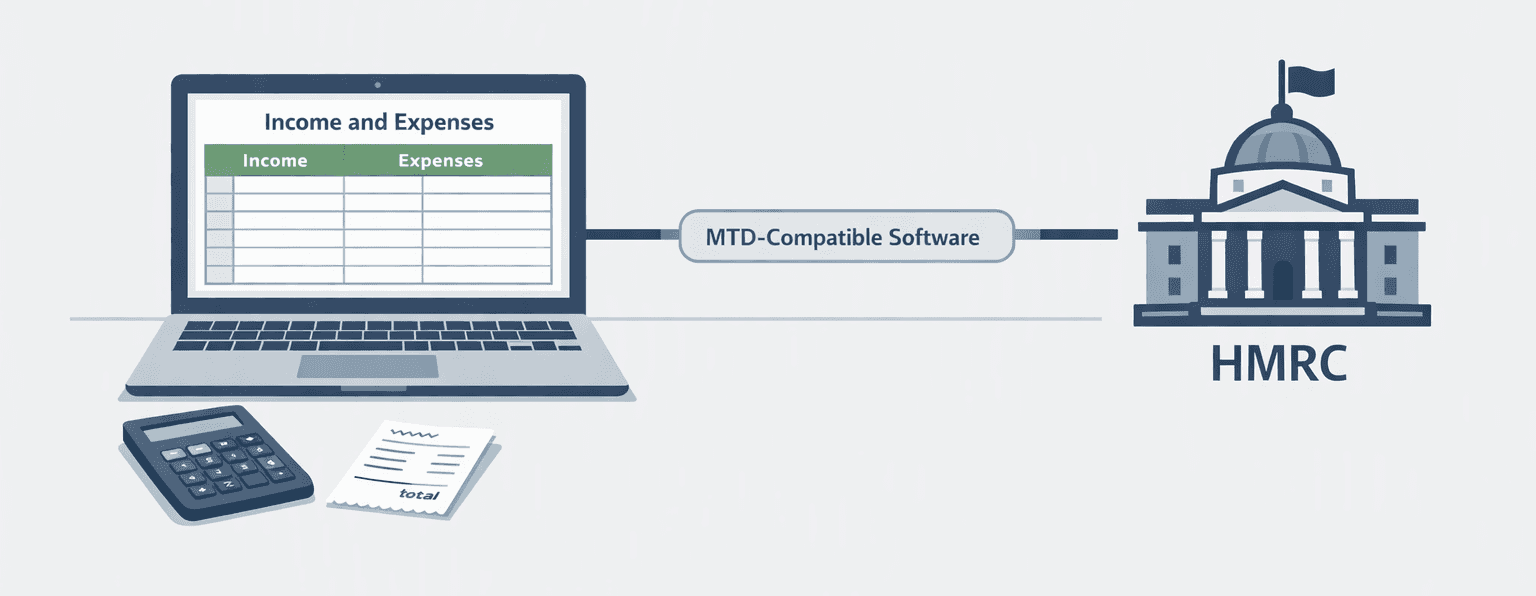
Can I Still Use Excel for Making Tax Digital?
A plain-English look at spreadsheets, software and what compatible digital records mean.
Read Article