Making Tax Digital Explained
3 min read
Want a simple overview first?
Download the free guide for UK sole traders and understand the key accounting records, deadlines and Making Tax Digital changes in plain English.

Under Making Tax Digital, affected sole traders must send quarterly updates to HMRC during the tax year. These updates summarise income and expenses for each quarter. After the tax year ends, a final submission is made to confirm the yearly figures and include any adjustments.
The final submission deadline is expected to remain aligned with the usual Self-Assessment deadline: 31 January after the end of the tax year.
Good record-keeping throughout the year makes these deadlines much easier to manage.
Common misconception
Not true.
Quarterly updates are only summaries of income and expenses, not final tax calculations.
Keep your records up to date each quarter, then confirm and adjust the final figures at year-end.

Making Tax Digital introduces regular reporting deadlines, but the final tax position is confirmed at year-end.

READY FOR THE NEXT STEP?
Explore my practical guides for UK sole traders, covering accounting essentials and Making Tax Digital software in plain English.

KEEP READING
Related Articles
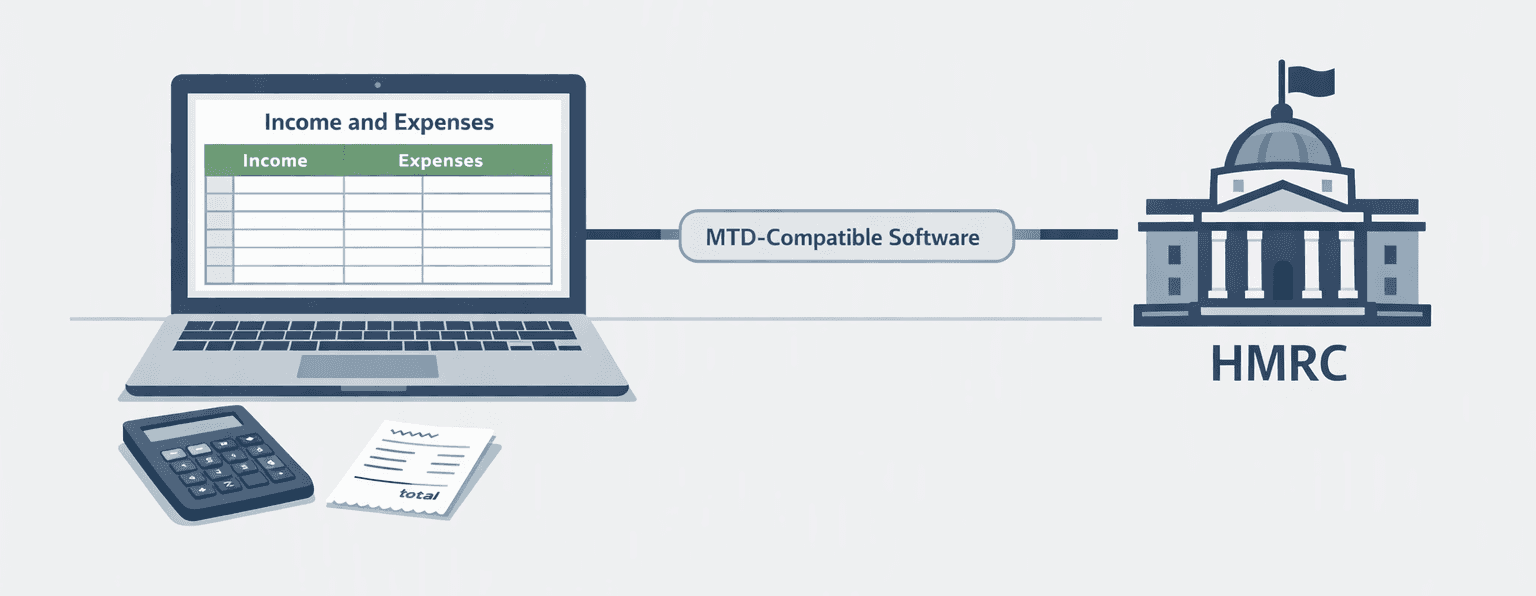
MAKING TAX DIGITAL
Can I Still Use Excel for Making Tax Digital?
A plain-English look at spreadsheets, software and what compatible digital records mean.
Read Article

MAKING TAX DIGITAL
What Is the Best Accounting Software for Making Tax Digital?
Compare the most popular accounting software compatible with Making Tax Digital and choose the solution that best suits your business.
Read Article

BASIC ACCOUNTING
What Are the Most Common Accounting Mistakes UK Sole Traders Make?
Avoid the most common accounting mistakes UK sole traders make and learn simple ways to keep accurate records and avoid costly errors.
Read Article